Firstly, I would like to express my grattitude to you which you had paid a lot of effort in giving us the best lectures. I will note down the suggestion and feedbacks you had given us during our PBL sessions, including how to become more confident and speak louder in front of others. Thanks for giving me the chance to explain one of the slides in front of the class, it gives me more self-confident. Most importantly, by applying knowledges of Biochemistry in our daily life, we are able to get a clear image of how our body works, and by that , we will be more concerned of ourselves especially our health.
From: Lee Jie Ying (70148)
To: Dr. Rosmawati
I like the way that Dr.Rosmawati teach me, it is very easy to memorize the biochemistry when the exam is around the corner. In my opinion, if the slides put more images, it will be very attractive for us. Images is better than words. Sometimes biochemistry are very boring and quite sleepy, but Dr. always try to share some interesting issues for us, so that we would not fall asleep. Besides, by having PBL session is very good. We can trigger some issues so that we can gain more knowledges by searching many informations from the internet. When come into the conclusion, Dr. also have share some informations to us like those issues happened around the world. when we proceed to the next topic, Dr. also have recall all the lectures on the previous topic then only proceed to the next topic. By recalling the lectures is very helpful for us to recall back the memories. So now come into the end, biochemistry is really useful in our daily life. Dr. have related many informations about the biochemistry, like for the topic of amino acids, metabolism, and vitamins. I am really glad that I have a nice and funny lecturer.
Dear Dr Rosmawati,
First of all, thank you for teaching me the biochemistry for this semester. It’s a fortune for me to be in your class because you are such a teacher of great kindness and understanding. I have a better concentration during your class due to your teaching methods – clearly explained and sometimes with jokes too… Thus, be in your class is quite relax, enjoyable and not too boring.
Next, among the activities that have been done in the class, I think that by having the PBL assessment is a great experience for me to train my public speaking skill besides boost my confidence by speaking louder in front of others. Furthermore, I think the PBL session is good for us as it trained us to be self-independent in searching for the relevant information regarding the given tasks without spoon-feeding by the lectures.
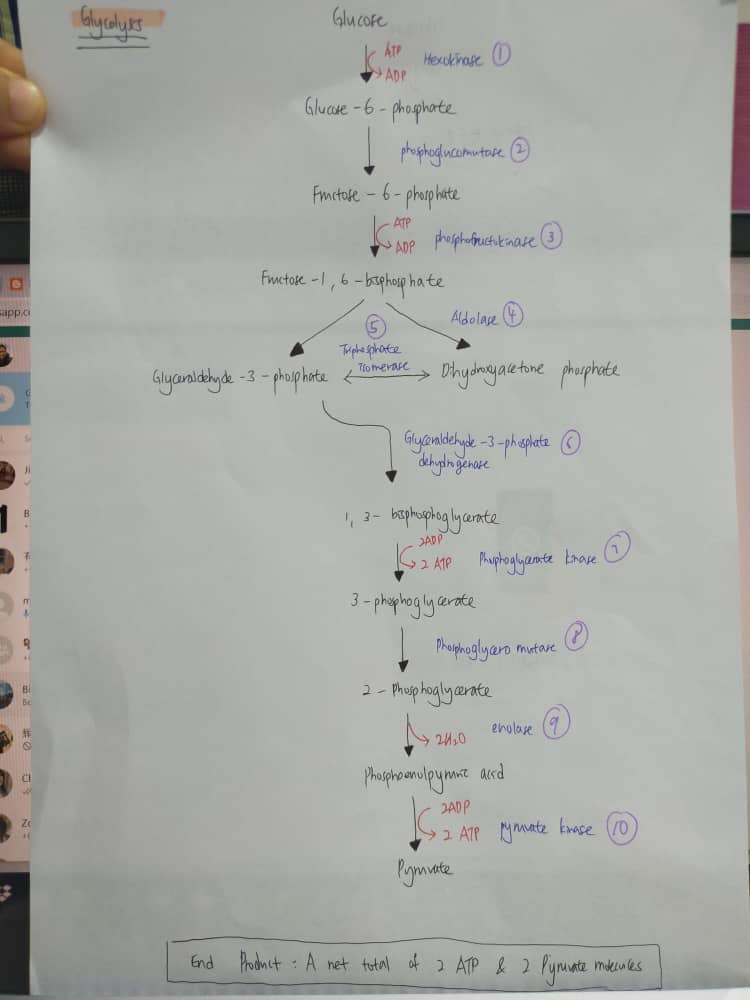
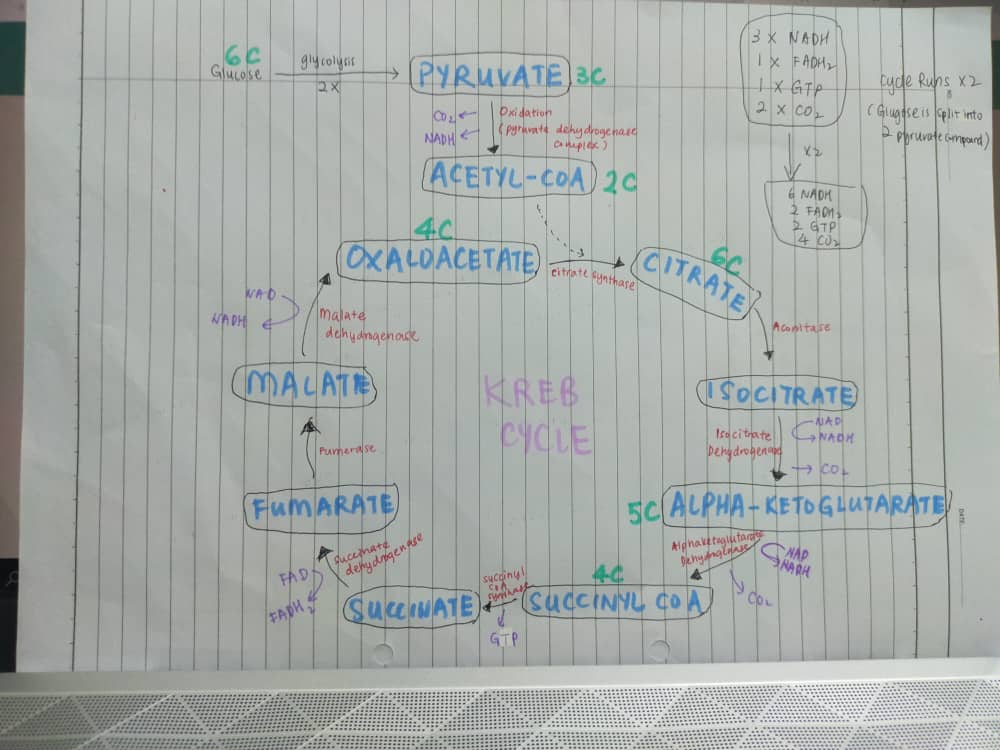
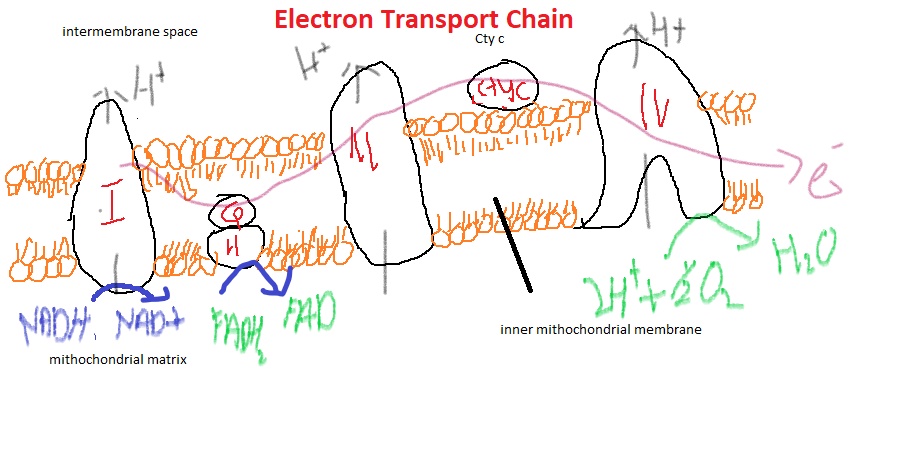
Since learning biochemistry, it implies more on the importance of metabolic processes such as Krebs cycle, glycolysis and electron transport chain to our body functioning. In sum, biochemistry is a very fun course and I really enjoyed it.
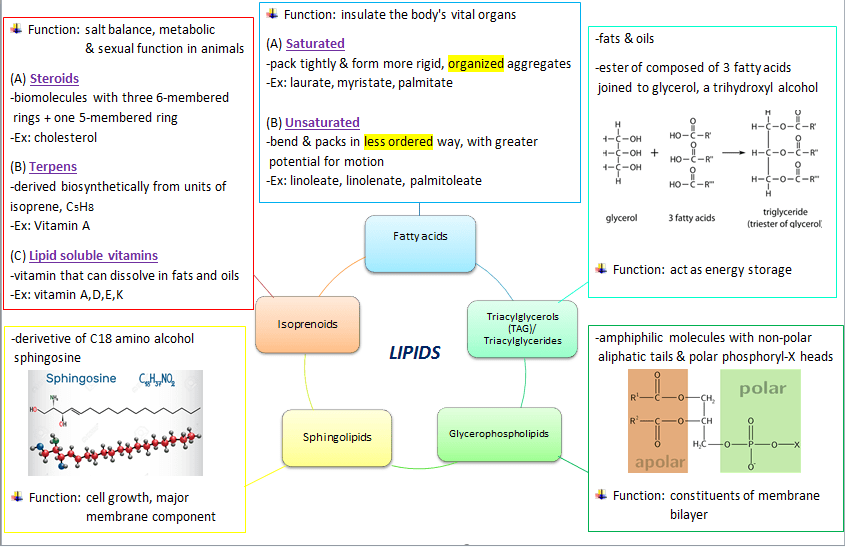
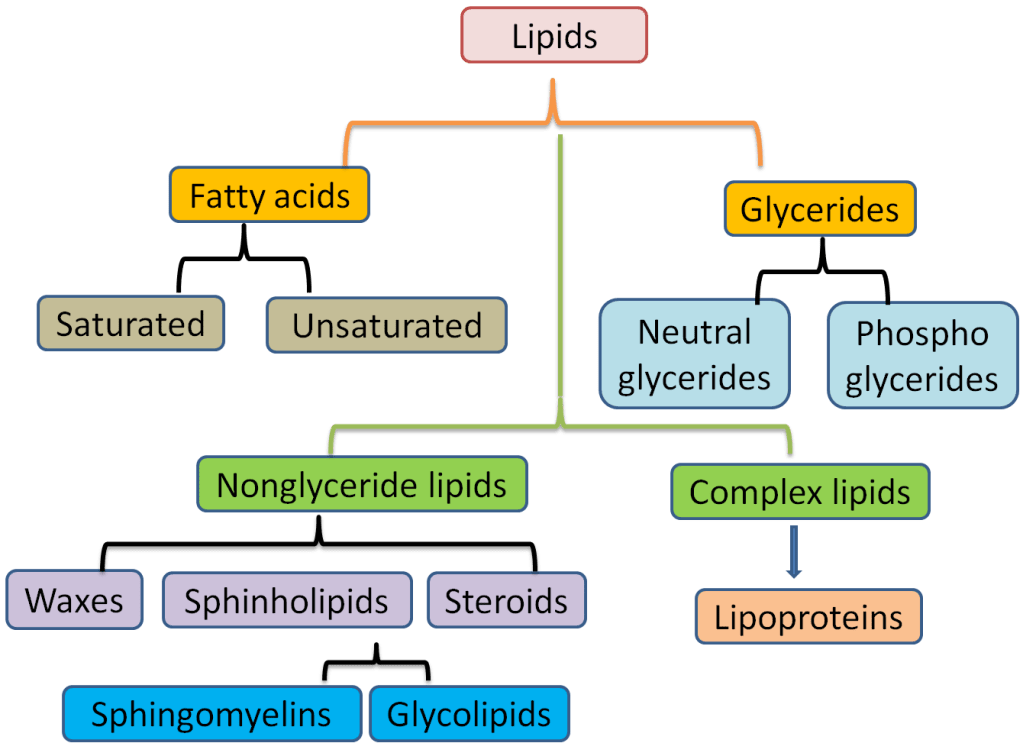
In this topic, I have learnt that lipids are biomolecules that are soluble in organic solvents. There are two types of lipids that are non-polar lipids and polar lipids. Non-polar lipids are act as energy storage and polar lipids are the basis of bilayers. Lipids are classified into several groups that are fatty acids, triacylglycerols, glycerophospholipids, sphingolipids and isoprenoids.
For fatty acids, the predominant fatty acids in plants and animals are C16 and C18. Saturated chains packs tightly and form more rigid, organized aggregates. Unsaturated chains bend and pack in less ordered way, with greater potential for motion.
For triacylglycerols, fatty acids are triesters of glycerol. Most contain two or three different types of fatty acid residues. Animal fats contain high percentage of saturated fatty acids and residues. The melting temperature of fatty TAG varies with degree of saturation and chain length. Triacylglycerols function as energy storage, insulation and saponification. TAG make up more than 95 percent of lipids in the diet and are commonly found in fried foods, vegetable oil, butter, whole milk, cheese, cream cheese, and some meats. Naturally occurring triacylglycerols are found in many foods, including avocados, olives, corn, and nuts.
For phospholipids, it can be degraded at various point, depending on the enzymes used. These enzymes are generally called phospholipase. For sphingolipids, they are derivatives of the C18 amino alcohol sphingosine. The example of sphingolipids are sphingomyelins, cerebrosides and gangliosides.. for steroids, steroids hormones serve many functions in animals which is including salt balance, metabolic and sexual functions.
Glycolipids a large group of sphingolipids, are so called because they contain one or more molecules of sugar (glucose or galactose). Glycolipids, a general property of which is immunological activity, include the cerebrosides, gangliosides, and ceramide oligosaccharides. Of limited distribution in nature, cerebrosides are most abundant in the myelin sheath surrounding nerves. Sulfate-containing cerebrosides, known as sulfatides, occur in the white matter of brain. Gangliosides, most abundant in nerve tissue (especially the gray matter of brain) and certain other tissues (e.g., spleen) are similar to cerebrosides except that, in addition to the sugar component, they contain several other molecules of carbohydrate (N-acetylglucosamine or N-acetylgalactosamine and N-acetylneuramine). Ceramide oligosaccharides also contain several molecules of carbohydrate; an example is globoside from red blood cells.
Isoprenoid any of a class of organic compounds composed of two or more units of hydrocarbons , with each unit consisting of five carbon atoms arranged in a specific pattern. Isoprenoids play widely varying roles in the physiological processes of plants and animals. They also have a number of commercial uses. Isoprenoids in living organisms range in function from pigments and fragrances to vitamins and precursors of sex hormones. One of the most familiar natural substances, rubber, is a polyisoprene. Other commercially valuable isoprenoids are those used as flavourings, solvents, and raw materials for chemicals.
~Kee Bee Hoon (70059)
The next lecture after the topic carbohydrates is the lipids. The definition of lipids is one of the types of biomolecules that are soluble in organic solvents. Based on today’s lessons, I have found out that there are two types of lipids based on their polarity, which is the non-polar lipids (for energy storage) and the polar lipids (as the basis of bilayers). Besides, lipids also can be further classified into five groups, which are fatty acids, triacylglycerols, glycerophospholipids, sphingolipids and isoprenoids.
The mind map displays below is the summary I learned from today’s class. It illustrated on the different types of carbohydrates with their respective functions.
All in all, the lipids are essential for all life on Earth. In my opinion, I think that having a deeper understanding in lipids is important as by doing so, it enables us to know more about the way they function and acts as biological components in our body.
~Chow Ying Qi (69365)
There are 2 types of lipids, the polar and the non-polar lipids. Lipids can also be classified into 5 major groups which are the fatty acids, triglycerol, glycerolphospholipds, sphingolipids and isoprenoids.
For fatty acids, they have a general formula of CH3(CH2)nCOOH, where n usually ranges from 2 to 28 and is always an even number. The carbons that are linked in single bond within the hydrocarbon chain is classified as a saturated fatty acid, while they are classified as unsaturated fatty acids when the hydrocarbon chain has a double bond. In addition to that, if there is just one double bond in a fatty acid, it is classified as monounsaturated fatty acid, while if there are multiple double bonds, it is said to be polyunsaturated fatty acid. Moreover, fatty acids are insoluble in water. For triglycerol,they are non-polar, hydrophobic, and insoluble in water. This is due to the ester linked bond between the polar hydroxyls of glycerol and the polar carboxylates of the fatty acids. Next ,for glycerolphospholipid, it is said to be an amphipathic molecule, having a hydrophobic part and a hydrophilic part. The fatty acid chains (tail) are hydrophobic and do not interact with water, whereas the phosphate-containing group (head) is hydrophilic due to its presence of charge and interacts readily with water. In terms of functional role, glycerolphospholipid is a specialised lipid which made up the majority of cell membrane structure. Lastly, I learnt that sphinholipids are the major membrane components. It act as receptors for pituitary glycoprotein hormones that regulate physiological functions.
Carbohydrates is divided into three types that is monosaccharides, disaccharides and polysaccharides.
Monosaccharides are simple sugars, the most common of which is glucose. In monosaccharides, the number of carbons usually ranges from three to seven. Monosaccharides are the simplest carbohydrates and they cannot be hydrolyzed to smaller carbohydrates under mild conditions. Monosaccharides demonstrates stereochemistry and are chiral. Aldoses with 3C or more and ketones with 4C or more are chiral. Monosaccharides also exhibits enantiomers, diastereomers and epimers characteristics. For enantiomers, stereoisomers that are mirror image. Secondly, diastereomers are stereoisomers that are not mirror images and lastly epimers are diastereomers that differ around 1 carbon. In daily life, for human, glucose is an important source of energy. During cellular respiration, energy is released from glucose, and that energy is used to help make adenosine triphosphate (ATP). Plants synthesize glucose using carbon dioxide and water, and glucose in turn is used for energy requirements for the plant. Excess glucose is often stored as starch that is catabolized by humans and other animals that fees on plants.
Disaccharides form when two monosaccharides undergo a dehydration reaction. A covalent bond formed between a carbohydrate molecule and another molecule is known as glycosidic bond. Glycosidic bonds can be of alpha or the beta type. Common disaccharides include lactose, maltose and sucrose. Lactose is a disaccharide consisting of the monomers glucose and galactose. It is found naturally in milk. Maltose, or malt sugar is aa disaccharide formed by a dehydration reaction between two glucose molecules. The most common disaccharide is sucrose, or table sugar, which is composed of the monomers glucose and fructose. Higher oligosaccharides are oligosaccharides groups are incorporated into many drug structures.
There are two types of polysaccharides which is homopolysaccharides and heteropolysaccharides. The functions of polysaccharides is for storage , structure an information. The storage is glycogen in animals and bacteria, starch in plants. The structure is about cellulose, chitin, peptidoglycans and glycosaminoglycans. The information is a bout cell surface oligo- and polysaccharides on proteins. The storage polysaccharides is starch. Starch is the principal food reserve in plants it made up of polymers of alpha-D-glucose units. Starch have two forms which is amylose and amylopectin. Glycogen also one of the storage of polysaccharides. Glycogen is the storage polysaccharide in animals. The structural polysaccharides is chitin. Main component of the call walls of fungi, the exoskeletons of arthropods such as crustaceans. The information of polysaccharides is glycoproteins. Glycoproteins are proteins that contain oligosaccharides chains covalently attached to polypeptide side-chains. Glycoproteins are often important integral membrane proteins, where they play a role in cell-cell interactions.
I have learnt the knowledge of carbohydrates through biochemistry. Hope my knowledge can used it in the future.
~Kee Bee Hoon (70059)
It is week 10 and today’s lecture is focusing on the topic carbohydrates. A carbohydrate is defined as a biomolecule consisting of carbon (C), hydrogen (H) and oxygen (O) atoms with the empirical formula of Cm(H2O)n (where n>3). The hydrogen–oxygen atom ratio in carbohydrate is just the same as in water molecules, that is 2:1. Hence, it is often be viewed as the hydrates of carbon.
In today’s class, I have learned that there are several classes of carbohydrates found in our daily lives, which are monosaccharides, disaccharides, oligosaccharides and polysaccharides provided with their respective functions . The mind map below is the learning outcome I obtained from today’s lesson.
Different types of carbohydrates and their functions
Lastly, I am thankful to Dr. Rosmawati for sharing this knowledge with me and I hope that I can apply the information I gained today in different aspects of life.
~Chow Ying Qi (69365)
I have learnt that there are four types of carbohydrates : monosaccharides , disaccharides , trisaccharide and polysaccharides . Monosaccharides are simple sugar molecules which act as building blocks of disaccharides and polysaccharides while disaccharides consist of sugar molecules which are composed of two monosaccharides. Next is trisaccharide which is an oligosaccharide consisting of three monosaccharides that are joined together while polysaccharides are carbohydrates made out of a number of monosaccharides linked via glcosidic bonds. Examples of monosaccharide are glucose, fructose and galactose that can be found in fruits ,while for disaccharides, lactose (glucose and galactose) in milk and sucrose in sugar (glucose and fructose) are some of the examples. Besides, some of the disaccharides are known as reducing sugar such as lactose and maltose. Moreover, example of trisaccharides are ribose and raffinose and the examples of polysaccharides. Last but not least, there are 4 major functions of carbohydrates in our body which are to provide energy, store energy, build macromolecules, and spare protein and fat for other uses.
On week 9, our class has carried out our first PBL session. To know more about the facts that we have discussed about, you can download the file below, which is our FILA table. It’s mainly about malnutrition.




 Biochemisrty E-Portfolio